

Does Xdã‚â® Mod.2ã‚â® 4ã¢â‚¬â³ Service Model 9mm Accept 10 And 16 Round Magazines
Home » Misc Stuffs
Computer Number Systems and its types
What are the number systems in Reckoner?
Number systems are the technique to represent numbers in the computer system architecture, every value that you lot are saving or getting into/from computer memory has a defined number system.
Computer architecture supports post-obit number systems.
- Binary number organisation
- Octal number system
- Decimal number system
- Hexadecimal (hex) number organization
1) Binary Number System
A Binary number system has only 2 digits that are 0 and 1. Every number (value) represents with 0 and 1 in this number system. The base of operations of binary number system is 2, considering information technology has but two digits.
two) Octal number organisation
Octal number system has only 8 (viii) digits from 0 to vii. Every number (value) represents with 0,one,2,iii,4,5,6 and 7 in this number organisation. The base of octal number system is 8, because it has simply viii digits.
three) Decimal number system
Decimal number organization has only ten (10) digits from 0 to 9. Every number (value) represents with 0,1,2,3,iv,five,6, 7,eight and nine in this number system. The base of decimal number system is 10, because it has merely 10 digits.
iv) Hexadecimal number system
A Hexadecimal number organization has xvi (16) alphanumeric values from 0 to 9 and A to F. Every number (value) represents with 0,1,two,3,four,v,6, 7,eight,nine,A,B,C,D,E and F in this number organization. The base of hexadecimal number system is 16, considering information technology has sixteen alphanumeric values. Here A is 10, B is eleven, C is 12, D is 13, Eastward is 14 and F is 15.
Table of the Numbers Systems with Base, Used Digits, Representation, C language representation:
| Number organisation | Base of operations | Used digits | Example | C Linguistic communication consignment |
| Binary | 2 | 0,1 | (11110000)2 | int val=0b11110000; |
| Octal | 8 | 0,1,2,3,4,5,half-dozen,7 | (360)8 | int val=0360; |
| Decimal | 10 | 0,1,ii,three,4,5,6,seven,8,9 | (240)10 | int val=240; |
| Hexadecimal | 16 | 0,ane,two,three,4,v,6,seven,8,9, A,B,C,D,E,F | (F0)xvi | int val=0xF0; |
Number System Conversions
There are three types of conversion:
- Decimal Number Organisation to Other Base
[for example: Decimal Number System to Binary Number Organisation] - Other Base to Decimal Number System
[for example: Binary Number System to Decimal Number Organization] - Other Base of operations to Other Base of operations
[for example: Binary Number System to Hexadecimal Number Organisation]
Decimal Number System to Other Base
To convert Number system from Decimal Number System to Any Other Base of operations is quite like shooting fish in a barrel; you take to follow just two steps:
A) Divide the Number (Decimal Number) past the base of target base system (in which you want to convert the number: Binary (2), octal (8) and Hexadecimal (16)).
B) Write the remainder from step 1 every bit a Least Signification Bit (LSB) to Step last equally a Most Significant Bit (MSB).
| Decimal to Binary Conversion | Effect |
Decimal Number is : (12345)10 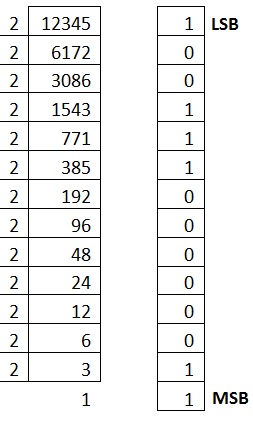 | Binary Number is (11000000111001)two |
| Decimal to Octal Conversion | Result |
Decimal Number is : (12345)x 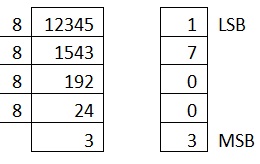 | Octal Number is (30071)8 |
| Decimal to Hexadecimal Conversion | Upshot |
| Case 1 Decimal Number is : (12345)10 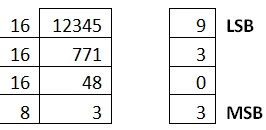 | Hexadecimal Number is (3039)16 |
| Example 2 Decimal Number is : (725)10 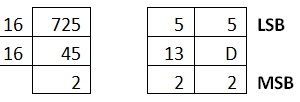 | Hexadecimal Number is (2D5)16 Convert 10, xi, 12, 13, 14, 15 to its equivalent... A, B, C, D, E, F |
Other Base Arrangement to Decimal Number Base of operations
To convert Number System from Any Other Base Organisation to Decimal Number System, you have to follow simply three steps:
A) Determine the base of operations value of source Number System (that you desire to convert), and too determine the position of digits from LSB (first digit'due south position – 0, second digit's position – one and so on).
B) Multiply each digit with its respective multiplication of position value and Base of Source Number System'due south Base of operations.
C) Add the resulted value in pace-B.
Explanation regarding examples:
Below given exams contains the following rows:
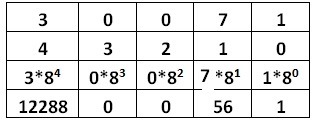
A) Row one contains the DIGITs of number (that is going to exist converted).
B) Row 2 contains the POSITION of each digit in the number system.
C) Row 3 contains the multiplication: DIGIT* BASE^POSITION.
D) Row 4 contains the calculated upshot of step C.
E) And then add each value of pace D, resulted value is the Decimal Number.
| Binary to Decimal Conversion | |
Binary Number is : (11000000111001)2 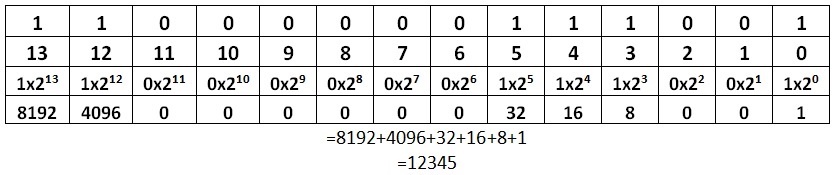 |
| Octal to Decimal Conversion | Result |
| Octal Number is : (30071)8 | =12288+0+0+56+1 =12345 Decimal Number is: (12345)x |
| Hexadecimal to Decimal Conversion | Result |
Hexadecimal Number is : (2D5)16 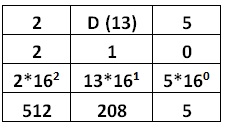 | =512+208+five =725 Decimal Number is: (725)x |
ADVERTISEMENT
Advertizement

Source: https://www.includehelp.com/computer-number-systems.aspx
Posted by: petersheirstles.blogspot.com
0 Response to "Does Xdã‚â® Mod.2ã‚â® 4ã¢â‚¬â³ Service Model 9mm Accept 10 And 16 Round Magazines"
Post a Comment