

Whenyou Lose Your Kids To Social Service Is There Any Other Way To Get Then Back??
Nurturing Inventiveness & Imagination for Child Development

Imagination is critical in kid development. Find parenting tips to help nurture and encourage inventiveness in your kids!
Cleo, a iv-year-old preschool child, excitedly told her Mom, "...and then we drank purple milk that came from a purple cow." Webster defines imagination every bit "the ability to form a picture in your mind of something that yous have not seen or experienced; the ability to think of new things." Every kid is born with an imagination. At times, parents and adults nurture children'due south imaginations and take joy in their artistic thoughts and acts. Other times, we might (deliberately or unknowingly) stifle children's imaginations, perchance concerned that children don't empathize what's real. Most children older than iii, however, know that imperial cows don't actually be but bask opportunities to imagine and think creatively. Allowing children to use their imagination is helpful and there are many benefits of pretend play in kid evolution. According to Susan Engel, Ph.D., writer of "Real Kids: Creating Meaning in Everyday Lives," ii and a one-half yr olds empathise the distinction between existent and pretend. But when they're in play mode, they can lose sight of that distinction, or information technology becomes unimportant.
Creative Thinking & Imagination for Child Evolution
Einstein said, "Imagination is more important than knowledge." Imagination is the door to possibilities. It is where creativity, ingenuity, and thinking outside the box begin for child development. Imaginative and creative play is how children learn near the world. During imaginative play, children manipulate materials, express themselves verbally and non-verbally, plan (intentionally or unintentionally), act, interact, react, and try different roles. Great opportunities for learning are possible when children participate in creative play with dolls, vehicles, blocks, rocks, cardboard, or boxes. Employing artistic thinking while manipulating play dough, creating recipes by mixing dirt and water, working with art materials, splashing in puddles, or pretending to fly tin can farther child development.
Imagination fosters cognitive and social development. Anybody wants to raise children who accomplish their highest intellectual and social/emotional potential. In early childhood instruction, disquisitional thinking skills and artistic trouble-solving abilities are goals for children's development. Imagining, trying new ways of doing things, and experimenting help develop critical thinking in children and foster artistic problem solving. Furthermore, imagination builds social-emotional development by assuasive children to contemplate unlike resolutions, thus boosting children'southward conviction, which can exist used in interactions with others. Imagination and creativity are also skills that our children will need when they join the workforce of the future.
Creativity for Kids: Tips for Nurturing Creative Minds
Below are tips and suggestions for nurturing your child's imagination and creativity:
- Spend time outdoors. The benefits of nature for child development are endless. Considering nature is always changing, it provides countless opportunities for discovery, creativity, and problem solving. The natural world inspires children to think, question, make suppositions, and develop creative minds. Children tin can draw in sand, make designs with twigs, build forts with branches, or but lie on the ground and wait upwardly at the sky
- Invent scenarios. When your child invents a scenario, he tries on lots of different roles and organizes his thoughts while developing social and verbal skills. Encourage your kid to play business firm, doctor, zoo, farm, space station, school, or shop. Join in the imaginative play past taking on a role yourself. Play with stuffed toys or puppets (make simple puppets by putting your hand in a sock). Allow your kid lead your playtime together. If your kid is into superheroes, call up of the power your kid might desire equally his ain superpower feeling. Consider having your child create a new superhero!
- Verbal activities. From rhymes to riddles, dizzy sounds to phonics, games such equally "I Spy" or making up lyrics to common tunes, exact interactive activities can inspire and nurture artistic minds. Simultaneously, these activities build vocabulary and help your child learn phonics. These games are besides the perfect and fun fashion to spend time in machine rides.
- Encourage art activities. Art is creative expression that nurtures imagination, non a lesson in following directions. Through painting, sculpture, collage, clay, drawing or any other medium, art is a mode for children to work through emotions, brand decisions, and express their ideas. Manipulating art materials provides a sense of freedom however likewise encourages focus and concentration. Art activities also develop fine motor skills and paw-eye coordination. Furthermore, fine art activities build confidence because children gain a sense of mastery over materials resulting in a new creation.
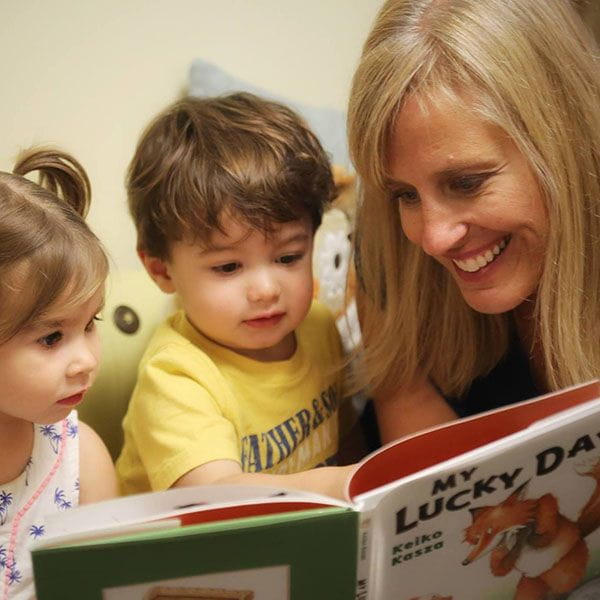
- Share literacy activities. Make reading fourth dimension memorable and discuss other possible scenarios or endings for the story by using your child'due south imagination. Make up stories with your child, at times with her as the chief character; other times propose moral dilemmas. Have turns making upward a standing story.
- Ask open up-ended and idea-provoking questions. Asking questions that provoke imaginative and creative thinking is an effective way to invite your kid to express his ideas and share his visions, while giving him the message that his ideas are important. "What do yous remember would happen if….?" "What'due south the difference between a domestic dog and a cat?" "What are some other ways to practise this?"
- Limit screen time (television, movies, computer, tablet, smart phone, handhelds, video games, etc.). Nurturing imagination and parenting in the digital age tin can be tough. Focusing on a screen is a passive way of learning for children. An culling would be to encourage children to create something new and dissimilar. Engaging children in a kinesthetic way using their entire bodies and their v senses likewise opens the mind.
- Remember to let for down time. Unstructured, unscheduled time allows children opportunities to imagine and create.
Early childhood is the peak fourth dimension to nurture children'south imaginations. So if your child comes home and says, "...then nosotros drank regal milk that came from a purple cow," or something like, offer encouragement for their creativity and imagination.
- Building imagination can likewise happen on the playground. Learn the benefits of playing at the playground for kid evolution and how to apply classic children'due south outdoor games to boost learning.
- With imagination and inventiveness, a paper-thin box becomes a whole new world for kids. Learn how to foster this skill as your child grows.
- Reading together is a great style to foster imagination. Find tips on how to brand reading aloud to kids and storytelling more fun and engaging.
- Arts and crafts allow children to apply their imagination and practice creativity. Check out our collection of fun crafts for some artistic inspiration.
Categories in this article:
Topics in this article:
About The Bright Horizons Didactics Team
Bright Horizons Education Team
Whether y'all're looking for parenting communication, or trying to figure out how to bring learning from the classroom to the family unit room, allow Bright Horizons early instruction experts be your trusted, knowledgeable resource. Get our weekly newsletter for all things early on child development—from the benefits of pretend play to at-home Stem activities, and teaching kindness—along with encouragement for every stage of your parenting journeying.

Source: https://www.brighthorizons.com/family-resources/articles/e-news/nurturing-creativity-and-imagination-for-child-development
Posted by: petersheirstles.blogspot.com
0 Response to "Whenyou Lose Your Kids To Social Service Is There Any Other Way To Get Then Back??"
Post a Comment